Start with the cause · then compare options
Advanced Gummy Smile Correction
Seeing more gum when you smile can have different causes. Tooth position, gum levels, lip movement and jaw proportions need different kinds of planning.
See a related before-and-after case
Your treatment, through your questions
What would you like to understand?
What causes it?
The same appearance can have different causes.
The same appearance can have different causes.
| Assessment focus | What it helps explain | Planning discussion |
|---|---|---|
| Tooth position and bite | Dental contribution to gum display | Braces, aligners or selected TAD-supported movement |
| Gum and tooth proportions | How much tooth surface is showing | Whether gum assessment is appropriate |
| Lip movement | How the upper lip moves during a smile | Whether another specialist opinion is needed |
| Jaw proportions | The skeletal contribution | Limits of orthodontics and when surgery may be discussed |
Your examination and records determine which options are appropriate.

The thinking behind your treatment
A gummy smile describes increased gum display when smiling. It can be a normal variation or an aesthetic concern; in some patients it is associated with tooth position, bite pattern, gum levels, lip movement or jaw proportions.
Specialist Orthodontist
ADVANCED ORTHODONTICS IN DUBAI
With Dr. Sree, Specialist Orthodontist, gummy smile correction begins with diagnosis. The goal is to understand the real cause of excessive gum display and plan treatment in a way that supports facial balance, smile harmony, and long-term stability.
Read the full explanation
Diagnosis-Led Approach
Focusing on the real structural causes for long-term facial balance and smile harmony
What Is a Gummy Smile?
THE FOUNDATION
A gummy smile refers to excessive gum display when smiling.
For some patients, this is mild and mainly aesthetic. For others, it may reflect an underlying orthodontic or skeletal issue affecting the relationship between the teeth, lips, and face.
The key question is not only how much gum shows, but why it shows.
What Causes Excessive Gum Display?
Not all gummy smiles have the same cause. Common reasons include:
Upper Tooth Over-Eruption
The upper front teeth may erupt too far downward, causing more gum tissue to show when smiling.
Deep Bite
A deep bite can change the way the upper front teeth dominate the smile and contribute to excessive gum display.
Vertical Growth Pattern
In some patients, the vertical dimension of the upper jaw contributes to increased gum show.
Hyperactive Upper Lip
The upper lip may lift higher than usual while smiling, exposing more gum tissue.
Altered Eruption Pattern
Read the full explanation
Altered passive eruption can leave gum covering more of the tooth crown, making teeth look short. Gum health and tooth proportions need assessment before treatment is chosen.
A proper evaluation helps determine whether the gummy smile is mainly dental, skeletal, soft tissue related, or a combination of factors.
A gummy smile may be orthodontic when it is linked to:
STRUCTURAL SOLUTIONS
When Gummy Smile Is an Orthodontic Problem
upper front teeth positioned too low
deep bite or vertical bite imbalance
protrusion of upper teeth
large overjet with lip trapping
facial proportion imbalance
smile arc and incisor display problems
The assessment separates tooth and bite problems from gum, lip and jaw factors so treatment addresses the relevant cause.
Orthodontic planning becomes especially important when the gummy smile appears together with bite problems, protrusion, or facial imbalance.
In more difficult cases involving severe deep bite, large overjet, lip trapping, or facial asymmetry, a specialist evaluation for complex orthodontic casesmay be needed.
Can Braces Fix a Gummy Smile?
In selected cases, yes.
Braces can help when excessive gum display is related to tooth position and bite mechanics. Orthodontic correction may improve a gummy smile by:
intruding upper front teeth
correcting deep bite
improving smile arc
balancing the relationship between the teeth, lips, and face
Whether braces are the right option depends on the diagnosis. Some gummy smiles respond well to orthodontics, while others may need a different or combined approach.
Treatment options
Match the option to the cause.
Non-Surgical Gummy Smile Correction
ADVANCED ALTERNATIVES
Many patients want to know whether a gummy smile can be corrected without surgery.
In selected cases, orthodontic treatment can reduce gum display without jaw surgery when tooth position or bite mechanics contribute. The amount of improvement and its stability depend on the diagnosis, movement limits and retention plan.
Vertical Control
TADS supported Intrusion
Bite Correction
Orthodontics alone cannot correct every cause. Gum treatment, lip-related care or jaw surgery may be discussed when the diagnosis calls for it.
Can Clear Aligners Help a Gummy Smile?
In selected mild to moderate cases, clear aligners may help improve gummy smile when the problem is related to tooth position and bite mechanics.
Their effectiveness depends on:
The source of the gum display
The amount of intrusion required
Bite complexity
Whether additional mechanics are needed
A specialist assessment helps determine whether aligners are appropriate or whether fixed appliances would provide better control.
TAD-Based Orthodontic Correction for Gummy Smile
For selected patients, Temporary Anchorage Devices (TADs) can be used to support controlled intrusion of the upper front teeth.
This may help reduce gum display while preserving facial harmony and avoiding more invasive treatment when appropriate.
TAD-based planning can be especially useful when gummy smile is linked to:
upper incisor over-eruption
vertical dentoalveolar excess
deep bite patterns
non-surgical correction goals
Because these mechanics require precision, proper diagnosis and specialist planning are essential.
TAD-supported gummy smile correction is often part of advanced orthodontic planning for complex bite correction .
A case from Dr. Sree’s practice
TAD-supported treatment for a complete deep bite.
- Self-ligating braces
- TADs
- Age 30
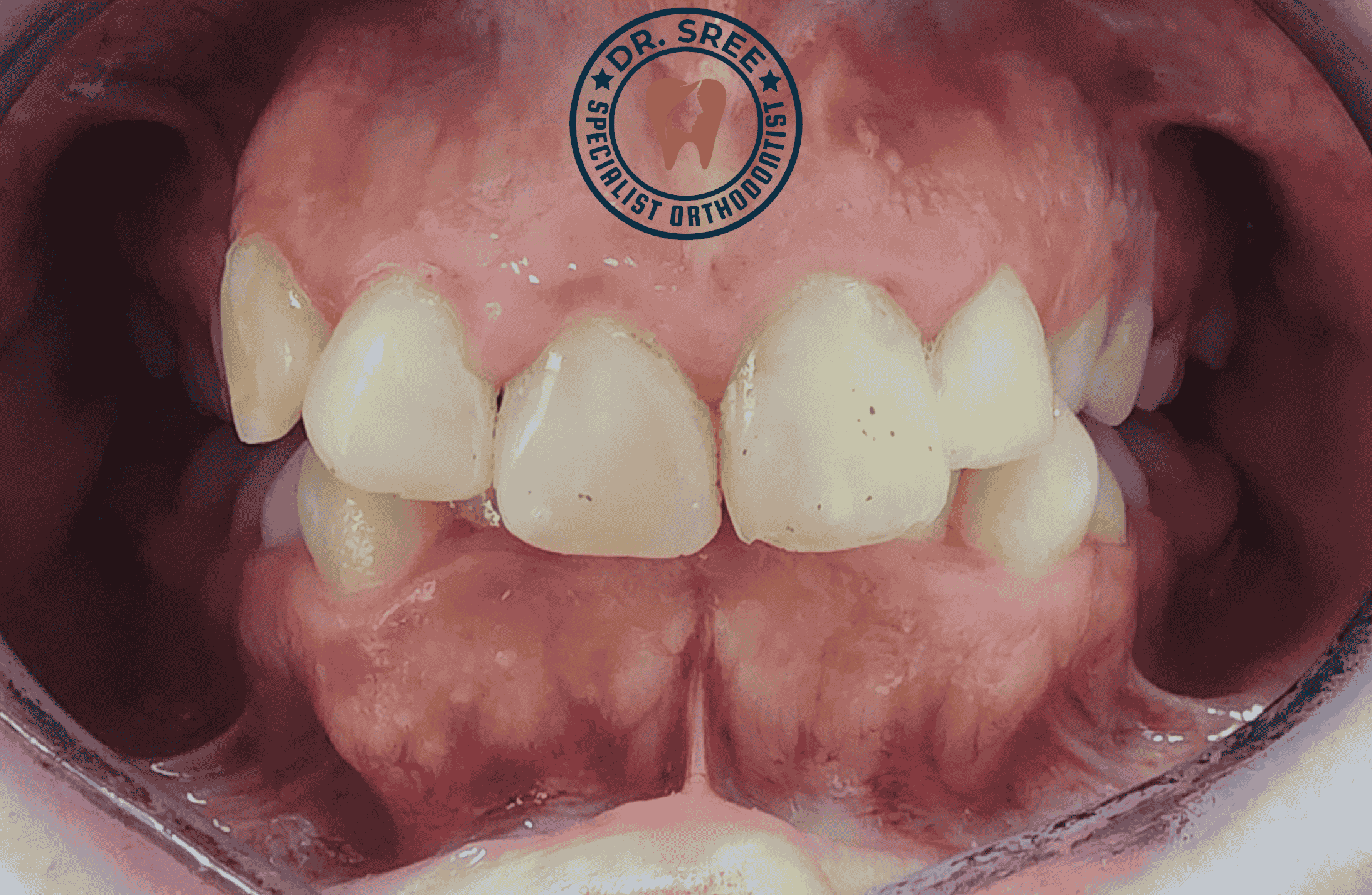
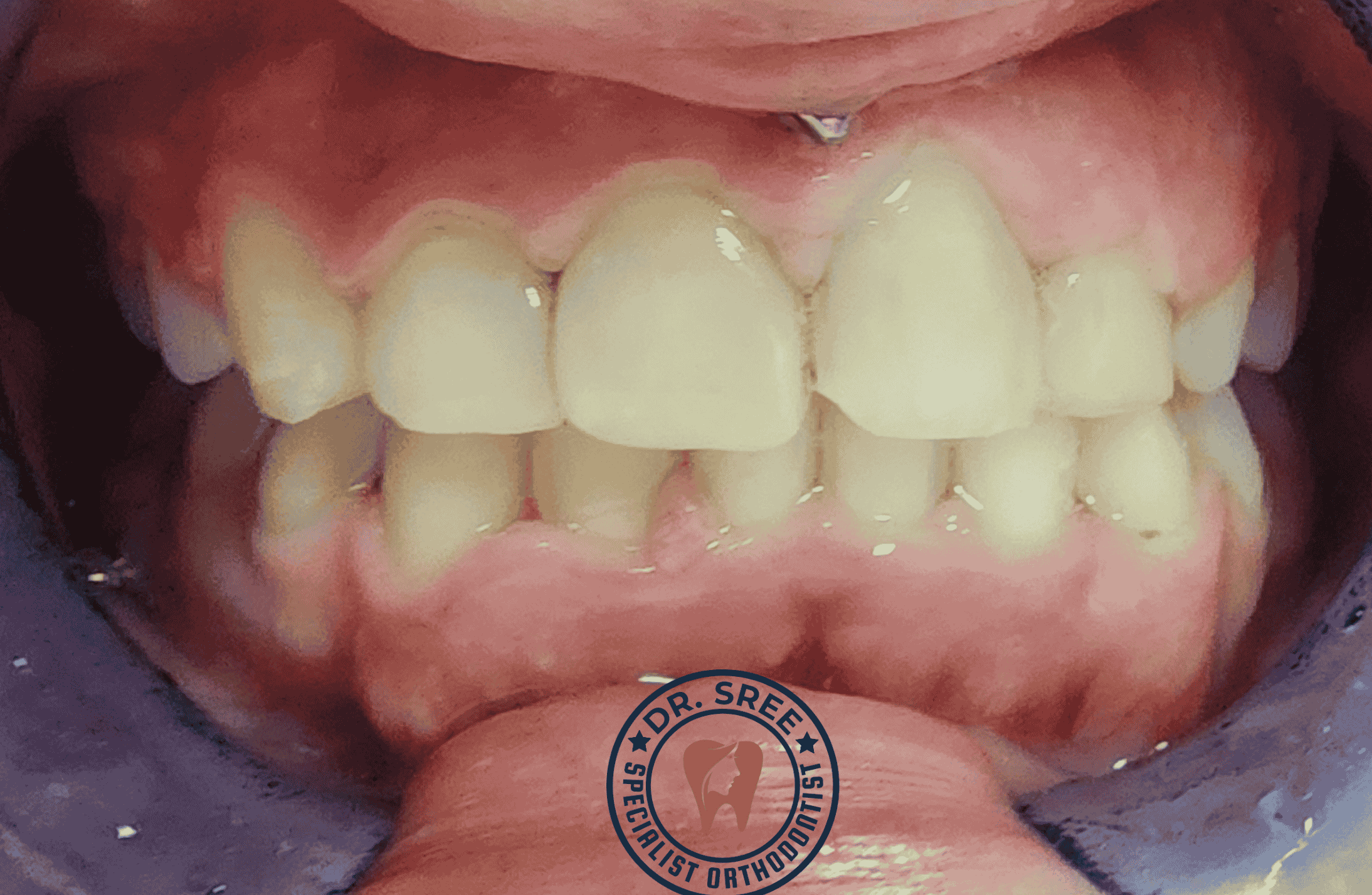
- The concern
- A 30-year-old patient whose published case records both a gummy smile and a complete deep bite.
- The approach
- Self-ligating braces with temporary anchorage devices (TADs), without extractions.
- What changed
- The paired bite photographs show the change in vertical overlap of the front teeth.
These are retracted bite photographs. They demonstrate the deep-bite change, not a measured reduction in gum display when smiling. Individual outcomes vary.
When Surgery May Be Needed — And When It May Not
ADVANCED ALTERNATIVES
Not every gummy smile should be treated the same way.
Some cases can improve with orthodontic mechanics alone. Others may involve a larger jaw pattern that requires multidisciplinary planning.
A transparent diagnosis should explain:
when orthodontic correction is appropriate
when non-surgical correction is realistic
when surgical discussion may be necessary
The discussion should also explain whether gum or lip treatment is relevant. Different causes may need coordinated care rather than one orthodontic solution.
Suitability & limits
Know what orthodontics can and cannot address.
Who May Be a Suitable Candidate?
SUITABILITY
Patients who may benefit from specialist evaluation include:
those with mild to moderate excessive gum display
patients with gummy smile related to tooth position or deep bite
adults seeking a non-surgical option when appropriate
teenagers or adults with vertical smile imbalance
patients who want a more balanced smile, not just straighter teeth
A severe skeletal cause may need a jaw-surgery assessment. For other diagnoses, orthodontic or combined dental treatment may be appropriate; improvement should be estimated from the individual findings.
Common Reasons Patients Seek This Evaluation
Patients often seek specialist evaluation because:
I show too much gum when I smile.
I have a deep bite and a gummy smile
I want a more balanced smile, not just straighter teeth.
I was offered a cosmetic treatment, but I want to know the real cause.
I want a non-surgical option if possible.
My upper teeth seem too long or too low.
These concerns can be discussed without assuming that every gummy smile needs treatment. Assessment helps identify suitable options and their limits.
Whole-smile planning
Consider the smile in the context of the face.
Facially Driven Planning for Gummy Smile Cases
Facially driven planning considers how the teeth, lips and jaw proportions relate during a natural smile.
Smile Arc
Lip Posture
Incisor Display
Chin Balance
Lower Facial Height
Overall Facial Harmony
The plan should reduce unwanted gum display without creating an inappropriate tooth display or smile arc. Lip support, facial proportions and the bite are considered together.
Your evaluation
Find the cause before deciding on treatment.
What to Expect During Evaluation
A gummy smile assessment may include:
Smile Analysis
Facial Analysis
Bite Evaluation
Intra Oral Scanning
Dental and Facial Midline Review
Radiographic Review When Indicated
Discussion of Treatment Options
The aim is to determine whether the gummy smile is mainly:
Skeletal
Dental
Soft Tissue Related
A combination of factors
What to Expect During Gummy Smile Treatment
Treatment planning depends on the diagnosis and complexity of the case. In general, the process may include:
Consultation and Diagnosis
Smile analysis, facial assessment, bite review, and records.
Active Orthodontic Treatment
Braces or clear aligners guide the planned tooth movements. TAD-supported intrusion may be added when indicated; the chosen mechanics depend on the source of the gum display.
Monitoring and Refinement
Progress is reviewed to monitor tooth movement, gum health, smile arc and bite. The plan is refined when needed as treatment progresses.
Retention
Retainers and follow-up are important to help maintain the result.
Benefits of Diagnosis-Led Gummy Smile Correction
When properly planned, gummy smile correction may offer:
Reduced gum display when the cause is suitable for treatment
Improved smile balance
Better bite coordination where a bite problem is present
A result planned around facial proportions
Clearer expectations about what can and cannot change
The goal is not only aesthetic improvement, but a result that respects function, structure, and long-term stability.
Important Limitations
Orthodontic treatment alone may not fully correct every gummy smile.
This is why proper assessment is so important. A realistic treatment plan should explain:
what orthodontics can improve
what may require additional treatment
what type of result is likely in your case
Clear diagnosis helps avoid unnecessary procedures and unrealistic expectations.
Gummy Smile Correction Starts With the Right Diagnosis
A gummy smile can have more than one cause. The best treatment is the one based on why it happens, not just how quickly it can be hidden.
If you are looking for gummy smile correction in Dubai, a specialist evaluation with Dr. Sree, Specialist Orthodontist can help determine whether your case is best managed with orthodontics, TAD-supported intrusion, or a broader treatment plan.
Planned by Dr. Sree, Specialist Orthodontist
Diagnosis-led gummy smile correction in Dubai with facially driven planning.
Your next steps, made simple.
Observe
Assess the smile at rest and in movement.
Identify
Separate dental, soft-tissue and skeletal factors.
Explain
Compare suitable options and their limits.
Your questions
Clear answers to your questions.
Frequently Asked Questions
Can orthodontics fix a gummy smile?
Orthodontics may help when tooth position or bite mechanics contribute to the gum display. Gum, lip and skeletal causes may need a different or combined approach.
Can braces make a gummy smile better?
Braces may help when upper-tooth position or vertical dental imbalance contributes. They cannot correct every gum, lip or jaw cause on their own.
Is non-surgical gummy smile correction possible?
In selected cases, yes. Orthodontic techniques such as vertical control and TAD-supported intrusion may help without jaw surgery.
Do all gummy smiles need surgery?
No. The appropriate options depend on the cause and severity. Some patients may consider orthodontics or gum/lip-related care; significant skeletal causes may need a surgical opinion.
Are clear aligners effective for gummy smile cases?
They can be effective in selected mild to moderate cases, depending on the bite mechanics and the source of the gum display.
Is Botox the only non-surgical option?
No. Botulinum toxin targets lip-muscle activity and does not address every cause of gum display. Tooth, gum or jaw factors need a cause-specific assessment, which may include orthodontic, periodontal or surgical options.
How long does treatment usually take?
Treatment time depends on the cause and complexity of the case. The exact duration can only be estimated after diagnosis and treatment planning.